Two sides, one vocabulary
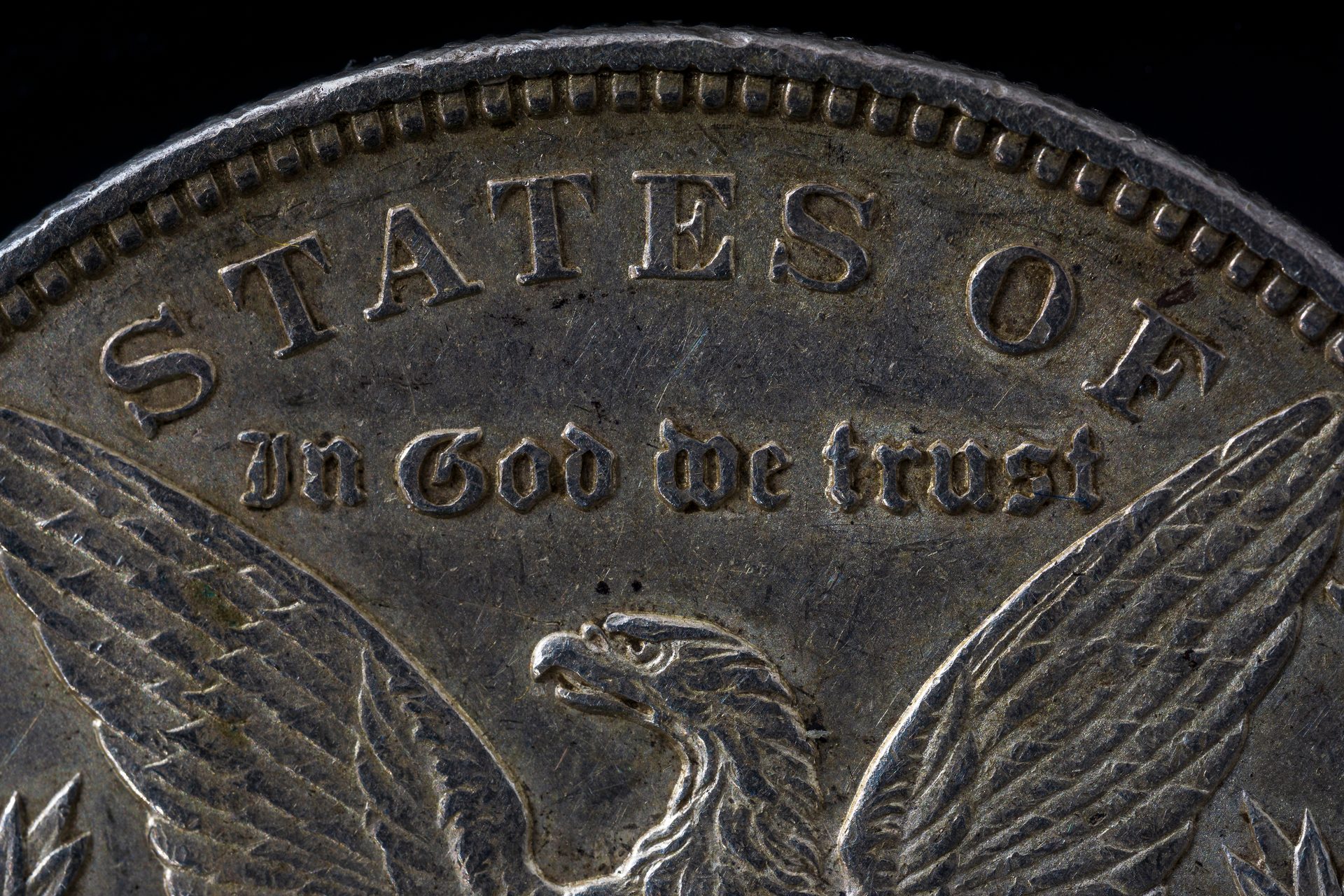
Start with the frame. The front of a coin is the obverse ("heads"), the back is the reverse. The raised design elements, portraits, eagles, wreaths, are devices; the flat background is the field; the raised border protecting it all is the rim, often lined with small beads called denticles. Inscriptions are legends and mottos. That's the whole grammar; everything else is reading.
The mint mark: a coin's birthplace
The single most important letter on a classic U.S. coin is its mint mark: CC for Carson City, O for New Orleans, S for San Francisco, D for Denver, and typically no mark at all for Philadelphia. Location varies by series: on the Morgan Dollar, look on the reverse beneath the wreath's bow; on the Peace Dollar, on the reverse just below ONE; on the Franklin Half, on the reverse above the Liberty Bell's wooden yoke. Same date, different letter, can mean an entirely different level of scarcity.
The artist's signature
Designers sign their work in miniature. George T. Morgan hid a tiny M at the base of Liberty's neck (and again on the reverse ribbon). Anthony de Francisci's monogram AF sits beneath the Peace Dollar's neck. John R. Sinnock's JRS rests at Franklin's shoulder. Finding the initials is the collector's handshake with the artist across a century.
Don't forget the edge
Turn the coin sideways. Most classic silver and gold carries a reeded edge of fine grooves, born as a defense against shaving precious metal. Hand-struck colonial cobs, by contrast, have irregular edges that record the shears that cut them. Even the part of the coin nobody looks at is testimony.